The Science of Breathing: How Pranayama Changes the Brain

Sheenam Midha
Writer
March 27, 2026 · Updated March 27, 2026
Have you ever wondered how you could relax your mind, that is racing at a thousand miles an hour, in just a few deep breaths? The explanation of why the benefits of deep breathing are so immense is in neuroscience. Something ancient yogis found to knew thousands of years ago is now being rediscovered by modern science: that controlled breathing has nothing to do with filling your lungs; it has everything to do with rewiring your brain.
What Is Pranayama and Why Does It Matter?
Pranayama is a yogic practice in which you practice control over your breath, meaning extension of life force. Although it may be mystic, the truth lies in hard science. By doing pranayama breathing exercises, you are not only relaxing, but you are also, in fact, altering the structure and functioning of your brain.
The recent neuroimaging research demonstrates that anxiety can be decreased by up to 40% with the regularity of the breathing exercises, and that the negative emotional states can be reduced to a significant degree. Now here is the interesting part about it, though: these changes do not last a few moments. Regular training literally reforms brain circuits related to reaction to stress and emotional processing.
How Deep Breathing Rewires Your Brain
The Amygdala Connection
Your brain has an alarm, which is your amygdala, and it is always on the lookout. It overdrives when stressed. The functional MRI studies indicate that pranayama exercises result in a significant decrease in the amygdala activity during the negative emotional images. This is because the brain literally becomes less sensitive to stressors.
A pioneering study discovered that within four weeks of Bhastrika pranayama, the test subjects experienced a reduction in activity in the right amygdala that is most closely associated with fear and anxiety reactions. Even more interesting? The individuals with the most significant amygdala activity changes were the ones who recorded the best amygdala activity changes in anxiety and negative mood.
Strengthening the Prefrontal Cortex
In resting your amygdala, deep breathing also involves the activation of your prefrontal cortex, the CEO of your brain in charge of rational thought and the regulation of your emotions. The ventromedial prefrontal cortex and the anterior cingulate cortex have higher activity using brain scans when it comes to breathing practices, especially when performing emotional regulation tasks.
This prefrontal activation does not happen accidentally. The top-down control mechanism that your breath offers will enable your thinking brain to have greater control over your emotional brain. It is such as improving emotional intelligence by upgrading yourself with each controlled breath.
The Vagus Nerve: Your Body's Natural Stress Buster
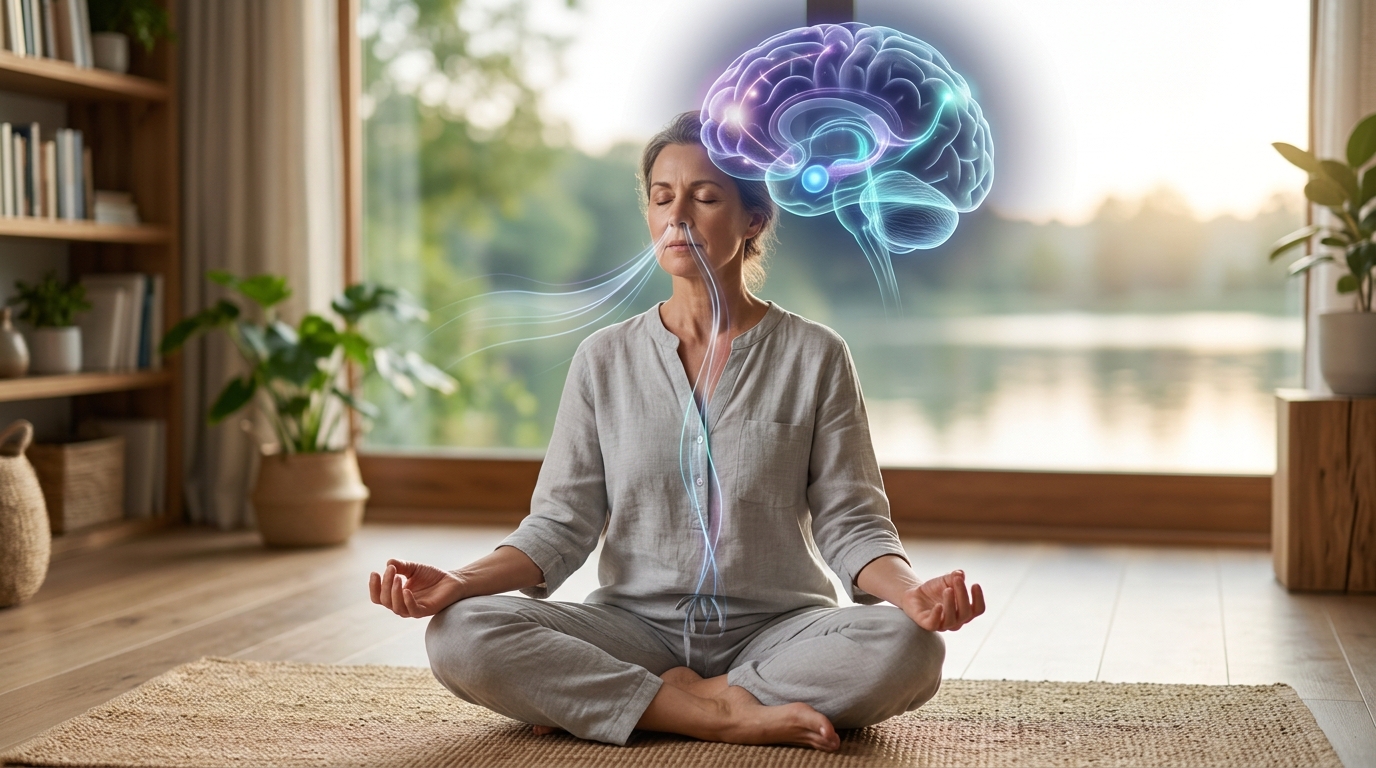
This is where the advantages of deep breathing become very interesting. Deep, slow breathing is a direct stimulator of the vagus nerve- a super highway between the brain and the heart, lungs and digestive system. This nerve is at the centre of your parasympathetic nervous system, the built-in relaxation mechanism of your body.
This "rest and digest" system is stimulated when you breathe slowly with a deep diaphragm and have a long exhale. It has been shown that slow breathing (4-6 breaths per minute) also elevates variability in heart rate, which is a major indicator of flexibility and resilience of the nervous system. An increased heart rate variability is an indicator of being more stress-adapted and able to overcome obstacles.
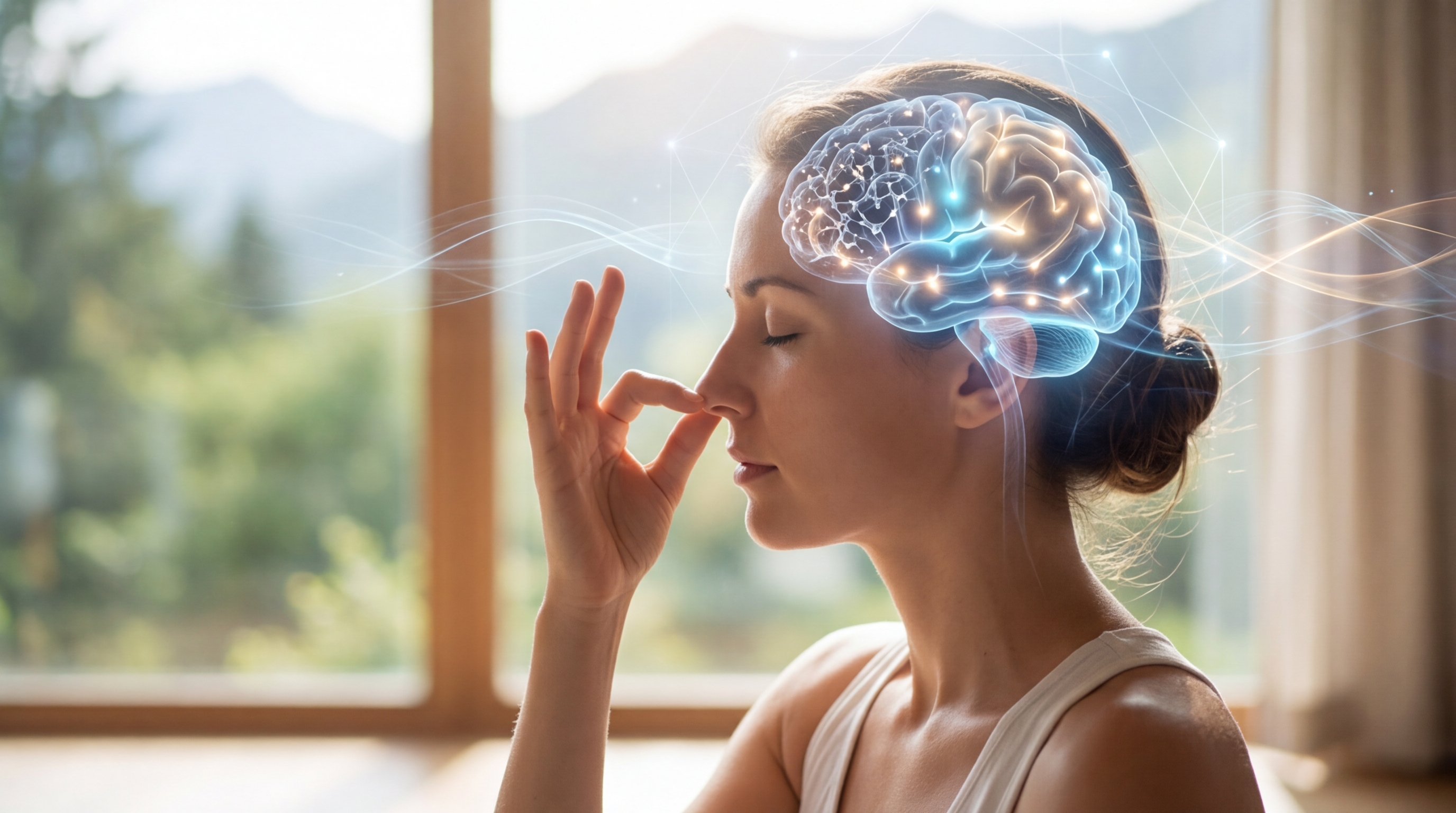
It is scientifically obvious that breath retention (kumbhaka) and prolonged exhalation are the most powerful examples of practices that result in the most powerful parasympathetic reactions. That is why other basic methods of pranayama, such as alternate nostril breathing (Nadi Shodhana), are so effective in getting rid of anxiety.
Specific Brain Changes from Regular Practice
Enhanced Connectivity
Studies of brain connectivity show that it is not just that pranayama alters the brain areas of an individual, but rather the connection between the areas. The studies indicate that the functional connectivity between the anterior insula and the lateral prefrontal cortex has been significantly lower following breathing practice. This lowered connectivity is directly associated with low anxiety.
Imagine it in this way: the anxiety systems of your brain become less trigger-happy and require a significant provocation to become active and trigger the stress responses.
Improved Attention and Cognitive Function
Emotion regulation is not the only advantage. Research indicates that meditation techniques increase attention, memory consolidation and cognitive flexibility. EEG research demonstrates that the more the practitioner is experienced, the higher the gamma wave activity that is related to increased awareness and processing of information.
A single problem-solving session in which the individual intends to solve an issue by meditating as part of the focused breathing enhances problem-solving skills and creative thinking. The mechanism? Breathing exercises can be used to regulate the activity of the brain waves to contain the surplus beta waves that are symbolized by anxiety and to improve the level of alpha waves that are characterized by relaxed alertness.
The Best Breathing Techniques for Brain Health
Bhramari Pranayama (Humming Bee Breath)
The repeated result of this method is known as paroxysmal gamma waves in the temporal lobe. Though applying a dramatic name, they are not pathological; on the contrary, they are linked to ultimate levels of meditation and better processing of emotions. It consists of humming when one exhales, which has a calming effect on the mind as well as heightening mental alertness.
Alternate Nostril Breathing
This has been found to balance inter-hemispherical brain activity and regulate the autonomic nervous system. It is a method of breathing in and out through each nostril in a certain sequence to produce the deepest form of mental balance.
4-7-8 Breathing
This is a very easy but strong technique, which involves breathing in 4 counts followed by a 7-count hold and then breathing out 8 counts, and this activates the relaxation response so fast. Research has shown its efficacy as an anxiety-reducing agent in pre-test and as a sleep-enhancing agent.
Real-World Impact: From Anxiety to Clarity
The clinical applications are impressive. Various randomized controlled studies indicate that breathing interventions:
Lessen state anxiety by 25-40 in weeks.
Reduce negative and enhance positive moods.
Enhance the symptoms of generalized anxiety disorder.
Reduced blood pressure and pulse rate.
Improve the quality and length of sleep.
Increase respiratory efficiency and lung capacity.
A study that was done on the effect of deep breathing during examinations revealed that children who engaged in deep breathing before the examinations experienced less anxiety and better performance in the tests. The method achieves this by getting the test-related cognitions in check and interrupting the thinking cycle of anxiety.
Making It Work: Practical Integration
It does not require hours of training to realize the fruits. Research indicates that:
Changes in the brain can be observed within 5-10 minutes per day.
Less effective sessions are less than 5 minutes.
The instruction led by humans (at least at first) is better.
It is more about consistency than the time period.
Mindful attention and breathing are beneficial factors when used together.
Begin with the basics: do five minutes of concentrated breathing every morning. Take a seat, shut your eyes, relax in the natural breathing process, and focus your attention on the feeling of breathing in and out. When your mind is lost (and it will be), mildly refocus your concentration on your breath.
The Bottom Line
Deep breathing is more than just the experience of being calmed in the moment, which is also desirable. The actual physical benefits of regularly practicing pranayama include restructuring the brain, which makes it resilient to stress, emotionally controlled and cognitively functioning better. The wisdom of the ages and the science of the present day are one, and the facts are overwhelming: your breath is the most convenient weapon you possess to work with the state of your mind.
Regardless of whether you are experiencing manifestations of chronic stress, anxiety, or just want to be more mentally clear, there is a scientifically supported way to do it by means of controlled breathing. No gear or prescriptions are necessary to do it; all you need is your breath and some minutes of concentration.
The yogis were not mistaken at all. Learn to control your breath, and you have learned to control your mind. Science now proves it.
The process of deep breathing reduces your heart rate and blood pressure because it causes the relaxation response to occur in your body. Training increases the strength of the heart rate variability, or in other words, your heart will be more flexible and stronger to stress.
Holding (breath retention) raises the tolerance of carbon dioxide and efficiency of oxygen within your cells. This exercise makes respiratory muscles stronger, which increases your body's capacity to handle stress and emotional control.
Deep breathing enhances more oxygen supply to your skin cells, which enhances a healthy glow and accelerated cell regeneration. Breathing exercises also improve circulation, causing the elimination of toxins, which reduces inflammation and enhances skin complexion in general.
Deep breathing may help to burn fat as it lowers the cortisol (stress hormone), which deposits fat around the belly. It also enhances digestion, increases metabolism and curbs emotional eating by regulating stress and anxiety.
In everyday life, deep breathing lowers the level of chronic stress, enhances the quality of sleep, and boosts your immune system. The benefits are increased concentration, less anxiety, increased energy, and increased emotional balance in a matter of weeks.
The immediate effects are felt in 2-3 minutes, and the long-lasting changes in the brain are achieved with the help of a routine. It has been found that in 4 weeks of 5-10 minutes a day, it gives measurable results in terms of anxiety, mood, and brain activity.
The correct type of deep breathing is usually safe and does not have any side effects. Nevertheless, as long as you have breathing issues, heart-related problems, or are disoriented during practice, then begin with slow progression and refer to your healthcare provider.
It is best in the early morning when you have nothing to eat since your mind is fresh and your stomach is empty. Nevertheless, any time is successful- there are a lot of people who enjoy breathing exercises before bedtime in order to get more sleep or any moment of stress during the day.